The J of Living Imperfectly: Why There Are No Jewels in Judgement #atozchallenge

want-to-be-around-people-that-things-amy-poehler

J Challenge LetterThe quote for today goes to the heart of what living imperfectly currently means to me. I’ve been writing about authenticity for the last nine days and I’m about to take a huge step in that direction by admitting that the weight of duty is currently weighing heavily. This is not an easy admission to make, because my sense of perfection is all wrapped up in duty, or more specifically the discharge of it.

I have never been the type of person who can ‘play” knowing there are things that have to be done. By things, I don’t mean housework things, I can happily let ironing, washing and cooking slide, except when they directly relate to family occasions. By things I mean work things, social obligation things, parental obligation things, wife obligation things and daughter obligations things. Seems like a lot of things to juggle before I can get anywhere near me time.

Except now I have started to become a lot more discerning in relation to those duties that really are to be given priority. This is largely because these duties involve being around people who don’t bring anything to my table. They judge, they gossip, they certainly don’t support and they don’t do things. It is extremely small-minded to comment on other people doing things from the safety of your comfort zone.  The way I see it, judging others is a past time for those who seek distraction from the mundane or who don’t have the courage to face up to the issues in their own life.  The gratification that comes from believing you are superior or from grading someone else’s life or performance against your exacting standards is short-lived and misconceived. It might kill time and serve as a bonding tool, but what kind of healthy relationship can you have built on negativity? Just look at female cliques as a typical example.

And that equally goes for judging ourselves and the relationship we have with ourselves. How can you have a healthy relationship with yourself comfort-zone-3built on negativity?

There are therefore no jewels in judgement.

If someone wants to be held hostage to their own fears that is entirely a matter for them. However, it does not mean that I have to be held  hostage to them as well. I have a choice and for the moment my choice is no.

Which means there is some unavoidable jettisoning of relationships and the judgements and negativity that go with them. Which also goes against the grain of my strive for perfection. The perfection paradox is multi-layered indeed.

The I of Living Imperfectly: The Irony of the Perfectionist #atozchallenge

I Challenge LetterThe fundamental irony of perfection is that we are taught to strive for it only to discover that it is that ever present striving that prevents us from living a happy life. On the surface perfectionism is an admirable trait as it usually produce excellence, but it comes at a cost. And that cost is the feeling that what we are doing is never enough, we are never enough.

I work in profession dominated by A type personalities. To play the game and succeed, we were all striving to bring not only our A game, but to perpetually push and push so that one day we would be able to bring and sustain our A+ game. Writing this now it reminds me of the old party game of blowing at an air filled balloon to ensure that it never reaches the floor. Having kept the balloon in the air, at the end of the game you are left breathless and dizzy, but with a fleetingly temporary sense of achievement.

I have been researching the ways that perfectionism is ironic and have come up with the following list:

  • if ever anyone could achieve the state of perfection, it is doubtful anyone could tolerate that perfectionist for long. Fun is an integral part of life.
  • true perfection is about enjoying the moment, enjoying life. Perfectionism tends to rob us of this enjoyment and of our sense of awe and wonder.
  • believing as a perfectionist that you must never make mistakes means that you will probably look out for any mistakes or signs of failure so you can correct these immediately.

  • the demand for perfection can actually impede performance. For example, you may turn you into a chronic procrastinator because of the fear of making mistakes. This also extends to being less innovative and creative or less open to new ideas.

  • far from being liberating, perfectionism is a psychological dictatorship. As one site puts it:

These personal restrictive ‘prisons’ are built on a solid foundation of rigid rules and assumptions of right and wrong, with walls of ‘should’s’ and ‘ought’s’ and ‘mustn’t’s’, strong bars of perfectionism, unbreakable locks of defeatism, and guards of arrogance on a constant duty to ‘be right’.

This description is so apt. I was trying to describe this very thing in my F post a couple of days ago and was struggling to put it Charlie Browninto words. I have discovered over the past couple of years that letting go of the black and white thinking plays a huge part in jettisoning perfectionist tendencies. That, and humour. However it is so very easy to slip back into old comfortable habits, so one must be ever vigilant and practice conscious awareness.

One thing that has struck me already about this Challenge is that in writing about perfectionism, I am taking a rather hard line. I don’t mean too, but it generally reflects the hard line I am taking with myself for having not realised all of this sooner (more perfectionism???). On the surface, perfectionism seems to have served me well, but I am only just getting a true picture of what I have missed in being the perfect perfectionism practitioner.

It is only now, by letting my grey matter think in grey terms that I am seeing colour. And that seems to be the most ironic truth of all.

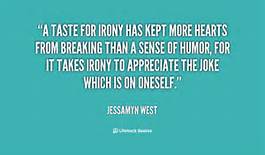
Irony quote


The H of Living Imperfectly: Hair and Hoary #atozchallenge

Indeed, simplicity is the grand secret of a lady’s toilet. When she burdens herself with a profusion of bijouterie she rather detracts from than adds to her personal appearance, while all outré fashions and ultra-style of dress, though they excite attention, neither win respect nor enhance the attraction of the wearer Martine’s Handbook to Etiquette and Guide to True Politeness, Arthur Martine, Dick & Fitzgerald Publishers, 1866.

H Challenge LetterWe all long for perfect hair no matter where we are on the ageing spectrum. Women obsess about it, men fantasize over it, our babies lovingly pull or stroke it.

Much has been written and opined about what makes hair perfect, both in terms of colour and length. Just this past weekend, my Sunday paper ran a feature on hair length. It pointed out the connection between hair length and femininity and suggested that the ideal woman in the eyes of a gentleman is a feminine woman and that the appearance of a woman brushing her long hair is very feminine, sensual and appealing.

There is clearly politics in female hair for it is expected that a woman’s hair must at all times be age appropriate.

Apparently, the rule of thumb is that whilst single, young women should maintain long hair as this is correlated to sexual desire. Once married though they are expected to cut their locks to ready themselves for the practical duties of housing-minding and child-rearing. Ladies, apparently marriage and short hair also means that we can “give up” as we have snagged ourselves a husband. Moreover, it is expected that once a woman hits 50, she must part with her tresses as a sign that her job of rearing the children is over.

H is also for Hmmmm.

I have a 50 year old friend who wears her hair long and grey. She is a very natural, nurturing person who has never coloured her hair. Her hairgrey hair length is about at her shoulder blades with bangs at the front and a feathering of length down the sides of her face. Simply by virtue of her choices, my friend has received many unsolicited not so positive remarks about not only her hair colour, but also its length.  These remarks are made not only by acquaintances, but also by complete strangers. The fact is she looks terrific and she is comfortable in her locks. She is also a married  mother of two and simply likes long hair.

Why should her hairstyle make anyone else uncomfortable is beyond me. I can only ascribe it to perfection gone made and expectations we have on what a middle aged woman should look like.

By contrast, I am hard pressed to raise any real interest in my hair from anyone and more particularly the males in my family. I have worn my hair short until a couple of years ago when I decided to grow it out as a testament to the heavy physical duties of my child rearing days being over. I let it grow to shoulder blade length and only recently decided to go a little shorter. The humid summer just past may have played a little in that decision. Two days ago I changed my hair colour considerably. One person in my family noticed, namely my younger son oh, and possibly the cat.

Maybe this is because my hair was not swinging in slow motion. Have you ever noticed that every shampoo commercial ever made depicts a young girl swinging her hair from side to side in slow motion? This might be an explanation of why washed hair in real life never looks as good as on the ads – shampoo was never meant to be used for full speed hair.

Living imperfectly means ignoring settled convention and wearing the hair that makes you comfortable. Long, short or a bit of both with a dash of grey, the choice is an individual one.

We should not become entangled in convention perfection.

The G of Living Imperfectly: Generations and Guilt #atozchallenge

Whether you’re working from home because your kid is sick, you freelance or you’re still looking for a job, there’s one thing you must do during a conference call: Get your kid to shut up.

Children hate anyone who takes your attention away from them. Like the animals that can sense an impending earth-quake, children can tell when you are about to say something very important to a client. They have a superpower and they use it for evil. You must prepare. – Sh*tty Mum: The Parenting Guide For The Rest Of Us by Laurie Kilmartin, Karen Moline, Alice Ybarbo and Mary Ann Zoellner, Abrams Image 2012

Letter GIf you are a parent who is always perfect in how you deal with your children and have no tolerance for those who are not then you are going to hate this post. I suggest you look away now to avoid the stress and anxiety not to mention beads of sweat that will form above your immaculately presented upper lip once you have delved into my imperfect world. For I am about to jump into that can of worms that is perfection and parenting or as I sometimes call it, perfecting the generations.

I have been a human being for 50 years. I have been a parent for almost 20 of those years. Little did I know that almost 20 years ago, I would be given my pass to the secret code. The Mo Code. Back in 2012, I wrote about the Mo Code in a blog about how to survive a road trips with teenagers. The Mo Code is my term for things that real mothers do and say, rather than what they should say. This is in sharp contrast to the utterances of Stepford mothers or the advice given by parenting manuals and advice columns, highlighting a kind of parenting credibility gap.

From the day I first gave birth, I was thrown into a vortex of expectation, both mine and others’. Everyone wants to be perceived to be the perfect parent, or if not perfect then at least a good one. And so the Mo Code comes into play. How dare we admit that parenting is hard or that little Johnny sometimes wears the same socks for three days straight? Or that we have allowed our children to watch TV for 15 minutes whilst taking a client call? Or that we sometimes feel overwhelmed, ill-equipped, tired and stressed, namely we are not perfect parents? Most of us admit these things only to the closest of confidants and definitely behind the curtain.

And then there’s the guilt. Guilt, parenting and perfection is the great triumvirate of birthing. Those clever ad executives with their baby product clients know this and peddle all three. Everyone’s a winner, right? Well everyone except us parents. Because any satisfaction or that we may have gained from buying into this consumer perfection, quickly evaporates when the next product comes onto the market.

Really, at the end of the day the only legitimate judges of our parenting are our children and ourselves, and even then how success in parenting is defined is highly subjective.

The important thing is that we keep parenting real. We need to talk about the hardships, the pitfalls, the wins and the losses and what really works for us. And we need to do it without guilt and with humour and authenticity. In this way we will be doing a huge service notimagesFEOCU3NX only to ourselves but to future generations of parents who will carry the weight of expectation well beyond the time their baby bump has disappeared.

For this reason, a book such as Sh*tty Mum: The Parenting Guide For The Rest Of Us  is to be welcomed. Not everyone will applaud or understand as the Amazon reviews will attest. However, it brings the real covert behaviour of the Mo Code out into the open and creates a new dialogue from a most refreshing angle. As this post from Essential Kids tells us:

In fact, a recent survey by parenting website BabyCentre in the UK found that lying is widespread among mothers. The pressure on them to be ‘perfect’ led to more than half of those questioned saying they felt the need to lie about their parenting skills to make them seem like better parents to others. Nine out of ten mothers confessed to using television to keep their children quiet, while 71 per cent admitted to lying to their child to make their day easier and a fifth of those questioned said they occasionally replaced a healthy dinner with chocolate and sweets.

These statistics don’t surprise me and I suspect they would be closely replicated in Australia.

It’s a real shame that we feel the need to be pressured by perception. Parenting is a unique journey for all of us and we should be supporting each other rather than treating it and our kids as the trophies of our perfection.

I really hope that one day we can let our parenting authenticity shine though so that we can enjoy it 100% guilt free like these authors.

The F of Living Imperfectly: Flexibility and Forgiveness #atozchallenge

Keep your engagements. Nothing is ruder than to make an engagements, be it of business or pleasure, and break it. If you memory is not sufficiently retentive to keep all the engagements you make stored within it, carry a little memorandum book and enter them there. Especially keep any appointment made with a lady, for, depend on it, the fair sex forgive any other fault in good breeding, sooner than a broken engagement – Martine’s Handbook to Etiquette and Guide to True Politeness, Arthur Martine, Dick & Fitzgerald Publishers, 1866.

F Challenge LetterWe all have a film reel in our head. The reel entitled Great Expectations” seems to be the standard by which we judge success and failure, ourselves and others. Whether your reel is a comedic, tragic, dramatic or fantasy filled, it is a constantly turning and projecting. How we react when real life does not play out according to our film reel determines our resilience and adaptability.

How do you react when life’s actors fluff their lines or go off script? Are you flexible enough to change direction or do you lament the need to ad lib?  And do you blame others when they do go off script?

Inflexibility or rigidity is one of the traits of perfectionism. What can easily be glossed over as a high standard, is really a low tolerance for deviation. Both in ourselves and others. This often leads to over thinking and planning things so that deviations can be minimized.

I used to be a planner. Researching, preparing and making sure each duck was in its right place in the row well ahead of time so that it could allpretty-woman-unscripted-scene be fine tuned if necessary. Now, not so much for I have discovered that my energy is better utilised in enjoying the activity or the company and in any event, you just can’t plan for every contingency, especially if human behaviour is involved.

As Brene Brown said: “Perfectionism is not about striving for excellence or healthy striving”. “It’s… a way of thinking and feeling that says this: ‘If I look perfect, do it perfect, work perfect and live perfect, I can avoid or minimize shame, blame and judgment.'”

Forgiveness therefore plays a big part in moving away from perfectionism. We need to forgive others for their deviation, but most importantly we need to forgive ourselves for our own.

There are some great movies in which actors ad libbed only to enhance the story. Who can forget Humphrey Bogart’s most famous line in Casablanca “Here’s looking at you kid”? or the scene between Richard Gere and Julia Roberts in Pretty Woman when he shows her a diamond necklace in an open and when she reaches out to touch it he snaps the box closed on her hand? The snap and Julia’s giggle in response are all unscripted.

The world is just waiting to be discovered through unscripted moments. We just need to be flexible enough so they will find us.


The E of Living Imperfectly: Aiming For Excellence Rather Than Perfection #atozchallenge

Gentlemen, we are going to relentlessly chase perfection, knowing full well we will not catch it, because nothing is perfect. But we are going to relentlessly chase it, because in the process we will catch excellence. I am not remotely interested in just being good – Vince Lombardi, legendary football coach of the Green Bay Packers.

E Challenge letterVince Lombardi is heralded as a great coach and motivator who has strong views on winning and achieving success. True it is he took the Packers to a Super Bowl win but has he got it right with this quote? And would it work for everyone?

I stumbled upon this quote a couple of days ago and it really resonated.  Then I began mulling it over and I have to respectfully disagree with Mr Lombardi.

In our formative years we are taught that to strive for something less than perfection is somehow substandard. We grow up with the notion that the aim of everything we do, from our deportment, manners, fashion, education and relationships is perfection. Unless we have reconciled our position in relation to perfection in our teenage years, we end up taking this concept into adulthood and into the workforce. And we tie ourselves in knots in our attempts to reach that goal.

If Mr Lombardi were still with us today, I would ask him why is he coaching others to strive for something which he himself acknowledges is impossible? Why is it not enough to aim for and reach excellence? This seems to be a tacit acknowledgement that humans can never reach a target. Instead of making the target realistic and hitting it, the target is over inflated so that some perceived lesser standard is reached.

This is not only bunkum, it is dangerous as many a parent has subsequently found out.

Michal J Fox got it right when he said:

Michael J Fox excellence


The Oxford Dictionary defines excellence as ” the quality of being outstanding or extremely good”. Perfection on the other hand connotes the concept of being flawless.

And yet, we so often confuse excellence with perfection. Business and academia often subscribes to the notion that if something is less than perfect then you haven’t done your best.  A lot of businesses and consultants proudly proclaim that their product or service is better because it is the product of perfection. And how could we be disappointed with perfection?

We need to be careful not only of the marketing hyperbole but also our own self talk. Often what we are really striving for is to be extremely good or outstanding, rather than to be flawless. But like Mr Lombardi, we tend to raise our own bar artificially high, thinking that’s what we need to do our best.  To further demonstrate the incongruity that this creates, take the grading system for universities in this country. Universities generally grade students on a scale from Fail to High Distinction. The grades that you can achieve are:

  1. Fail – less than 50%
  2. Pass – 50-64%
  3. Credit – 65-74%
  4. Distinction – 75-84%
  5. High Distinction – 85%-100%

There is no grade called Perfect for 100%. You reach 100%, you will get the same grade just like all the students who achieved excellence. The difference may be in the percentage, but I have yet to see an academic who has awarded a perfect score on any assessment based on subjective criteria.

Aiming to do our best and for excellence keeps it real. Anything more and we sacrifice our humanness. And we need to remember that it is more than acceptable to be human. Indeed, my very best friends are.

PS. To my fellow A to Zers, I am running really behind on responding to your comments and commenting on your blogs due to a crushing work and academic load. I am hoping to catch up in the next couple of days. I beg your indulgence until then.


The D of Living Imperfectly: Dancing and Daring #atozchallenge

Lead the lady through the quadrille ; do not drag her, nor clasp her hand as if it were made of wood, lest she, not unjustly, think you a bear.

You will not, if you are wise, stand up in a quadrille without knowing something of the figure ; and if you are master of a few of the steps, so much the better. But dance quietly ; do not kick and caper about, nor sway your body to and fro; dance only from the hips downwards; and lead the lady as lightly as you would tread a measure with a spirit of gossamer –  Martine’s Handbook to Etiquette and Guide to True Politeness, Arthur Martine, Dick & Fitzgerald Publishers, 1866.

D Challenge LetterIt’s been heartening to see a few comments come through about dancing. Most of us love to dance yet most of us hesitate because we think we are not good enough. I have never danced with a spirit of gossamer, but as a teen and twenty something I loved to dance. I still do, although now I get to do it far less often.

I recently saw a documentary about a dance troupe called the Hip Op-eration Crew. Billed as the word’s oldest hip hop dance group, these spirited men and women are dancing up a storm. The members of the crew aged between 67 and 95 all live on Waiheke Island, near New Zealand and hip hop together. Whilst the majority of the 25 members are women, there are also a few males brave enough to take to the dance floor. 11 members are in their 80s and 90s, with the average age being 78.

Recently the Crew performed at the World Hip Hop Championships in Las Vegas and stole more than a few hearts amongst the hip and famous. Here’s a glimpse of their performance at the Worlds (photo from the Group’s Facebook page).

Hip Operation Perfermance Las vegas

The Crew’s main message is about fighting ageism and promoting respect with youth. They seem to be doing a fantastic job having been picked up by main stream media around the world. The documentary I saw was a two part special on ageing disgracefully and also featured a 79 years young Florence Henderson embracing life beyond Mrs Brady. The story begins with a shot of two senior citizens sipping tea with a comment to the effect that this is what is expected of our elderly. It then unexpectedly morphs with a delightful cascade of colour into a blaze of imperfection.

I am all for fighting ageism and growing old disgracefully. But more importantly, for the purpose of this post, let’s focus on the dance. The dance steps are not perfect. Neither is the co-ordination. None of it seems to matter, for if the Crew had waited for perfection they never would have made it to Vegas.

And this is the point. What opportunities do we deny ourselves by our strive for perfection? Could it even be a spot on the world championship stage?

There are no world championships for perfectionism. And if there were, the chances of earning a perfect score are pretty slim.

And speaking of dancing, I am off to a highland festival tomorrow. My first ever. There will be dancing, there will be kilts, there will be extreme imperfection.

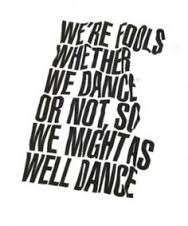
fools dancing

The C of Living Imperfectly: Choice and Career #atozchallenge

Talk as little of yourself as possible or of any science or business in which you have acquired fame Martine’s Handbook to Etiquette and Guide to True Politeness, Arthur Martine, Dick & Fitzgerald Publishers, 1866.

C Challenge LetterA couple of years ago, I went to see John Farnham in concert. For those who are unfamiliar with Mr Farnham’s work, he is an Australian legend singer whose biggest hit was a song called You’re the Voice from an album by the name of Whispering Jack. This particular concert tour was a celebration of the 25th anniversary of the release of the 1986 album. He sang the whole album track by track in order. As John (who has a wonderful sense of humour which comes through in the concert banter between songs) explained he had the idea of undertaking this concert tour in his kitchen one night and that unfortunately, he didn’t really think it through. For you see, his biggest song was track number 2 on the album which meant it was sung early on in the show.

I feel the same way about the letter C and the concept of perfection as applied to career. This is a real big one for me. And it has come earlier in the Challenge than I would have liked. So much for building to a crescendo.

For this post, I have no real wisdom to share other than my own experience.

Career has always been a big issue in our family. Being the child of immigrant parents it was drummed into me form an early age that education was a priority and that I should pursue a profession. My parents had sacrificed a lot in delivering to me a world of opportunity in this land called Australia. I just had to do my bit.

And I did. And it was good for about the first 20 years. My identity and much of my energy were firmly tied to my career. The one other thing I really wanted to be outside of career woman was a parent and thankfully, the Universe blessed me to have that experience twice.

But one day, I woke and it was good no more. Every job has its ups and downs, stresses and strains, wins and losses. Mine was no different. Every other time though the feeling of malaise lasted a matter of days or weeks. This time was different. This was a lingering, confusing doubt that had me thinking “what if” and what really was on the other side of that office divide. I remember leaving every office at lunch time and breathing some real air and watching people having a life and feeling very disconnected.

For the next seven months I tried everything to push through the feelings as I had always done in the past. And with every passing day, I sank perfect careerdeeper and deeper into despair and confusion. Tasks that had been easy and second nature seemed insurmountable and I had lost my will to learn. My thoughts swirled round and round in my head in ever-increasing circles, the answer was there somewhere but it was just beyond reach.

It was dumb I suppose, but the thought of changing careers was impossible. Based on the remuneration and status I had achieved, by earning and being anything less I felt I was letting both myself and my family down. How could I possibly justify such a radical change given the sacrifices my parents had made, given how much I had invested in my career? How could I justify having to spend money on being retrained and reskilled whilst not bringing in an income and how could I justify being so selfish? How could I do any of it at my age?

The perfect wife, the perfect mother, the perfect daughter and the perfect income earner all were at stake.

So I quit. I quit so I could think and strategize and I firmly believed that when I walked out the door, I never wanted to work again. Everything that I held certain was  up for grabs. It literally felt like I had walked off a cliff and had no idea whether the landing would be painful. I had never, ever just walked away from anything before.

During my time away from work, I explored that non-office life and provided for my family in a non-monetary way. I walked and thought and thought and walked and came to the realisation that priorities can and do change in life and that it was quite acceptable to change track to give effect to this new world order. That was my light bulb moment, career perfection blown away by the wind that was enveloping me on the cliff tops which formed my favourite walking path.

I had been stuck in a prison of my own making and at last I found the key.

What then transpired was that I went back into the workforce in a similar, but not the same area. What I lost in income, I gained tenfold in motivation, focus and learning.

Career perfection or career satisfaction, the choice was always mine to make and I didn’t even know it.

In the words of John Farnham, from You’re the Voice”

We have the chance to turn the pages over
We can write what we want to write
We gotta make ends meet, before we get much older

The B of Living Imperfectly: Beauty and Belonging #atozchallenge

As the ladies and gentlemen arrive, each should be shown to a room exclusively provided for their reception; and the gentleman conducts the lady in his charge to the door of the ladies’ dressing-room, while he goes to the gentlemen’s apartment, each to prepare their toilet suitably to entering the reception-room – Martine’s Handbook to Etiquette and Guide to True Politeness, Arthur Martine, Dick & Fitzgerald Publishers, 1866.

B Challenge LetterResearch for this year’s Challenge has led me to find some great reading material. One such treasure has been  Brene Brown’s book, The Gifts of Imperfection, Let Go Of Who You Think You’re Supposed To Be And Embrace Who You Are. The title says it all, doesn’t it? If a book could be a mirror, this one would be mine right now.

In it, she describes midlife in a nutshell:

People may call what happens at midlife “a crisis”, but it is not. It’s an unravelling – a time when you feel a desperate pull to live the life you want to live, not the one you’re “supposed” to live. The unravelling is a time when you are challenged by the universe to let go of who you think you are supposed to be and to embrace who you are.”

It truly does feel like an unravelling. And after the unravelling comes the sifting, the sorting and finally the reassembled product. Perhaps it is our discontent with perfectionism that finally brings us to this point. Maybe we discover that we can truly never control perception, because by its very nature it is in the eye of the beholder. And perfection is all about perception, our own and that of others.

Which leads me into today’s topic of beauty and belonging. As Brene Brown so eloquently puts it, belonging is the innate human desire to be part of something bigger than ourselves and we so often try to acquire it by fitting in and seeking approval. However, according to Brown this is a false pretext because:

true belonging only happens when we present our authentic, imperfect selves to the world, our sense of belonging can never be greater than our level of self-acceptance.

Strong words. Strong concept. Holy Guacamole!

To most of us beauty plays a central role in self-acceptance. It is the basis upon which the cosmetic, cosmetic surgery and fashion industries are built all of which sell the outward ideal of perfection. The messages start early and young, especially for women. Being physically beautiful is essential to social success and possibly even success in general. Physical beauty should be a priority, because physical beauty (or lack of) is the first thing people notice about you, it is essential to perception, it is a worthy investment. Beauty is an industry and perfection is its weapon.

Which brings us to the recent phenomenon of the no makeup selfie. You may have seen invitations through Facebook or may have given one Being yourself battleyourself to post a no makeup selfie to raise funds for cancer research. Whether this concept actually raises money is still up for question as is the issue of whether it actually has merit in the eyes of cancer sufferers. Leaving both of these aside,  what I have found extraordinary about  is that posting a no makeup selfie should cause such a level of angst or be seen to be a brave thing by women.  This has been expressed in various ways including some expressing relief that they did not receive an invitation to post. Have we really come to a point where showing your true authentic self without “your face” on is that novel or indeed that newsworthy?

To belong, we need to accept ourselves first. And that means with make up and without.

Sleep, nutrition and self-love are really the only make up we need to put our best face forward. Further, none of these run or smudge.

The A of Living Imperfectly: Attitude not Aptitude #atozchallenge

Do not endeavour to shine in all companies. Leave room for your hearers to imagine something within you beyond all you have said. And remember the more you are praised, the more you are envied – Martine’s Handbook to Etiquette and Guide to True Politeness, Arthur Martine, Dick & Fitzgerald Publishers, 1866

A Challenge LetterOld etiquette books are a great source of entertainment. Pages and pages of rules and tips on how to act and how not to act. In short, an almost complete prescription for how to be perceived as perfect by your fellow members of polite society. The entertainment value comes from seeing whether the rules as prescribed are still relevant today and if so whether the consequences of a transgression are still quite as harsh. For this reason and because to me these etiquette books are the antitheses of authenticity and a symbol of the energy involved in striving for perfection, I will try to open each Challenge post with a relevant quote from one of these books.

We spend a lot of time working on aptitude. Studying, researching and honing our skills in our relentless strive to show the world a finished and polished product. In most cases, we never even get to the point of showing the world the skills we have mastered because in our minds they are deemed not enough or as we wish them to be. And the world and we miss out. For in all of the finishing and polishing we have missed the chance to truly be ourselves and to learn even more. Worse yet, we often chose not to attempt something at all, because we know that it will not be prefect.

True it is we marvel at those who display amazing talent.

It is also true that after a certain age, we also marvel and even admire those that try no matter how imperfect they are. Namely, we admire their attitude. And why is this? Why does the 80 year old skydiver fill our hearts with so much inspiration? Is it because their technique is perfect? Or because we have finally let them off the hook of the need to be perfect?

At what point in the human life cycle is the statute of limitations reached for the need to strive for perfection ?

your-attitude-not-your-aptitude-determines-your-altitude-zig-ziglar-quotes

It is a real shame that we only allow ourselves and others the luxury of true authenticity in the twilight of their lives. This is the one time when we seem to celebrate attitude over aptitude.

When Zig Ziglar framed his famous words he did so in the context of describing the powerful benefits of a positive attitude. This post is not about advocating a positive attitude (although that helps – a lot), but rather an attitude of I am who I am and I’m ready to show the world even though my aptitude may not be the standard that I think is required.

To illustrate this point, I had an interesting conversation with a lady at my Zumba class a couple of weeks ago. She had come a couple of times but was still feeling a little awkward at the end of her third class when she said:

“I think I’ll have to practice to some videos at home before I come back, I just can’t master the steps”

To which I told her: “Don’t worry, it will come.  It took me about six to eight classes to start getting the hang of it”

To which she replied “I’m so glad you said that, it makes me feel a lot better. I really love the music and I love to dance.”

Denying yourself fun and enjoyment because you miss a few steps is just reinforcing your perfectionist comfort zone. Hearing someone had the same struggles is liberation.

Closeting your talents in the strive for perfection denies you the opportunity of real learning, feedback and growth. It may also deny you an opportunity for connection. One of the surest way to connect is to give someone the opportunity to say “yeah, me too.”

Daring to believe in your aptitude is daring to be imperfect.

To all of my fellow A to Z bloggers, happy A day and let the Games begin!

Is there something you have always wanted to try but haven’t for the fear of not doing it perfectly?