OK, so I know I’m not perfect. The past week of commitments has meant that I had to let the Challenge slide. It’s the first time in 3 years I have done so and whilst I would have preferred to be putting up my “O” post today like the rest of you, I am content to be back at “L” and continuing my Challenge journey. I’m looking forward to catching up all around, on the reading on the writing and on the commenting.
All of this is just to prove that I don’t pre-bake my Challenge posts. If I was that perfect I would have written them for the week and programmed them to magically appear. Whilst that’s a great idea, I prefer my posts to reflect what I feel on the day.
What’s a Challenge without a challenge, right?
 In my K post I commented briefly about being held hostage to another’s fear. This is something that is always a possibility in a relationship. In our strive to love someone and make someone else happy, we can take on their fears.
When my kids were younger and invited their young play mates over to our house, it was always interesting talking to these children because more often than not, at that age they are a reflection of their parents. A veritable transmitter of their parents’ fears. Now, everyone has the right to raise their kids the way they see fit so this is not about judging anyone’s parenting style. But it wasn’t long before you could see what grown up fears and ideas had been transplanted into these young minds.
The fear of catching a cold or of becoming messy were the real obvious ones. But there were others like fear around certain foods that were not for medical reasons or fears about activities that were perceived dangerous, something like walking on the sand at the beach near the water. Of course, as the parent of the host child you listen, adjust and respect the visiting parent’s/child’s values.But how many of these kids were missing out because of their parents’ fears? How many of these kids would end up losing themselves because of these fears? And how many of them would transmit these fears across the generations to their own children?
In adult relationships the same thing can happen. Your partner has certain fears. For ease, let’s use dancing. How many of you have stopped dancing because your partner doesn’t like it? You go to weddings and other celebrations and you don’t dance because your partner fears looking like this and getting this reaction:

Dancing is a relatively straight forward fear and probably most of us can get by without dancing if we have to. But what about those more complex fears, the ones that go to your core, your passions, who you are? They can’t be sacrificed so easily without losing your sense of self.
The loss tends to come incrementally until one day the light goes on. So what do you do at that point? Do you keep losing yourself for the sake of the relationship or do you make changes in your own life to reclaim the lost parts of yourself?
The choice is not easy and there are a whole lot of complexities to sort through, particularly if the happiness of the other person is important to you. The bottom line though is that you are just as worthy and your happiness is just as important as that of your partner’s and no-one has the right to force their fears onto you. Acceptance does not mean total conformity and losing your identity. A true equal relationship is about both people being free to be able to be who they are.
Reclaiming who you are is not about being selfish. True selfishness comes from requiring someone else to live by our standards alone.
Dare to be imperfect, dare to be you.

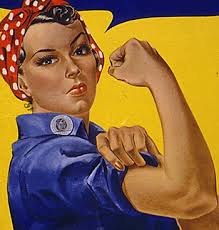















 When I was in my early thirties, a highly ambitious thing and knee-deep in my career, I would put on my career woman’s mask. Back then I felt uncomfortable talking about motherhood, parenting, really any out of office life at all for fear of being judged not committed or dedicated in what was a male dominated environment. I would wait until either a male colleague or client would raise the subject of family or children first and then I would be comfortable in contributing. Talk about golf, rugby union and beer was highly accepted, sadly I was not into any of those.

 outwardly is cold and aloof and vastly superior but is a marshmallow inside. I have a soft spot for proud men who after scratching the surface reveal a great deal of humanity. Having status and money and a nice piece of real estate in Pemberly doesn’t hurt either and neither does looking good in breeches or smouldering whilst soaking wet in a lake. My quintessential Mr Darcy has to be Colin Firth in the BBC production.
 words, his presence is that commanding. He is one of 6 children and the oldest and has been raised in appropriate isolated ducal fashion. A man who puts duty and propriety above all, he is totally befuddled by Christine Derrick, a commoner with an enchanting and defiant spirit. Deep inside Wulfric is still that lonely child raised to carry out duty and keep the family wealth and blood lines going. His awkwardness in social situations, loyalty to his family and the war within between duty and love make him strong, yet vulnerable – a heady combination.
 hmmm, there seems to be a pattern emerging here, now that I write these down, however I assure you the similarities with entry no. 1 are surface only. Take
  one American from a dysfunctional, wealthy family and drop him into the colour and spectacle of India, with Amritsar and Goa as backdrops, add cheesy Bollywood song and dance routines and a former Indian Miss World, Aishwarya Rai Bachchan, and you have the makings of a classic. This William Darcy is so lovable not only because of his eyes (how good are they?), but because he is absolutely lost trying to navigate Indian custom and tradition and he doesn’t stand a chance against the female character’s mother. Also you have to admire the will power of any man who can wait to kiss his bride until after the wedding.
 word to say here and that’s “gentleman”. Leopold takes his 1870 gentlemanly ways and manners and transports them to modern-day New
  York to romance Kate, played by Meg Ryan. What makes Leopold so great is that he knows how to woo a lady, 1870’s style – with a slow burn. His 1870’s speech and sense of style just makes you long for a quieter, gentler time, when marriages were made to last. And well, the character is played by Hugh Jackman – enough said.
 killer wardrobe who takes over companies and makes gazillions but has to pay for a call girl for companionship – what’s not to love? No walking barefoot on the grass or driving his own car for this man, he has to be shown how to get a life and kudos for him, he listens! A man who can get rid of his long-standing, sleazy lawyer because the lawyer has maligned the woman he has known for a mere four days is pure class. Add a fear of heights, a fear of committment and a proposal after an aha moment and you are on your way. And with dialogue like this, throw away the pre-nup:
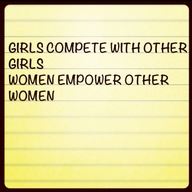 I have seen women who are wonderful change when they are in the company of a clique or when they encounter a conflict between their own personal interests and that of their clique. From friend to frenemy in a blink of an eye. Most of us have insecurities in some way shape or form – but clique thinking only serves to feed these.
 Raising the Curtain